

Finger Beats: Turning Finger Movement in VR
PatientVR Finger Beats: Turning Finger Movement into an Experience
We’re continuing to build the PatientVR Interact library around a simple idea: movement-based activities should not always feel like exercises.
Our newest Interact, Finger Beats, was designed for people experiencing difficulties with finger or hand movement, coordination or fine motor control. We wanted to take something repetitive and potentially frustrating and turn it into an experience that patients can engage with, repeat and, importantly, enjoy.
Finger Beats combines music, visual prompts and simple gamified tasks to encourage patients to work with individual fingers, multiple fingers or both hands. The experience is self-paced, so the level of activity can be adjusted to suit the person using it.
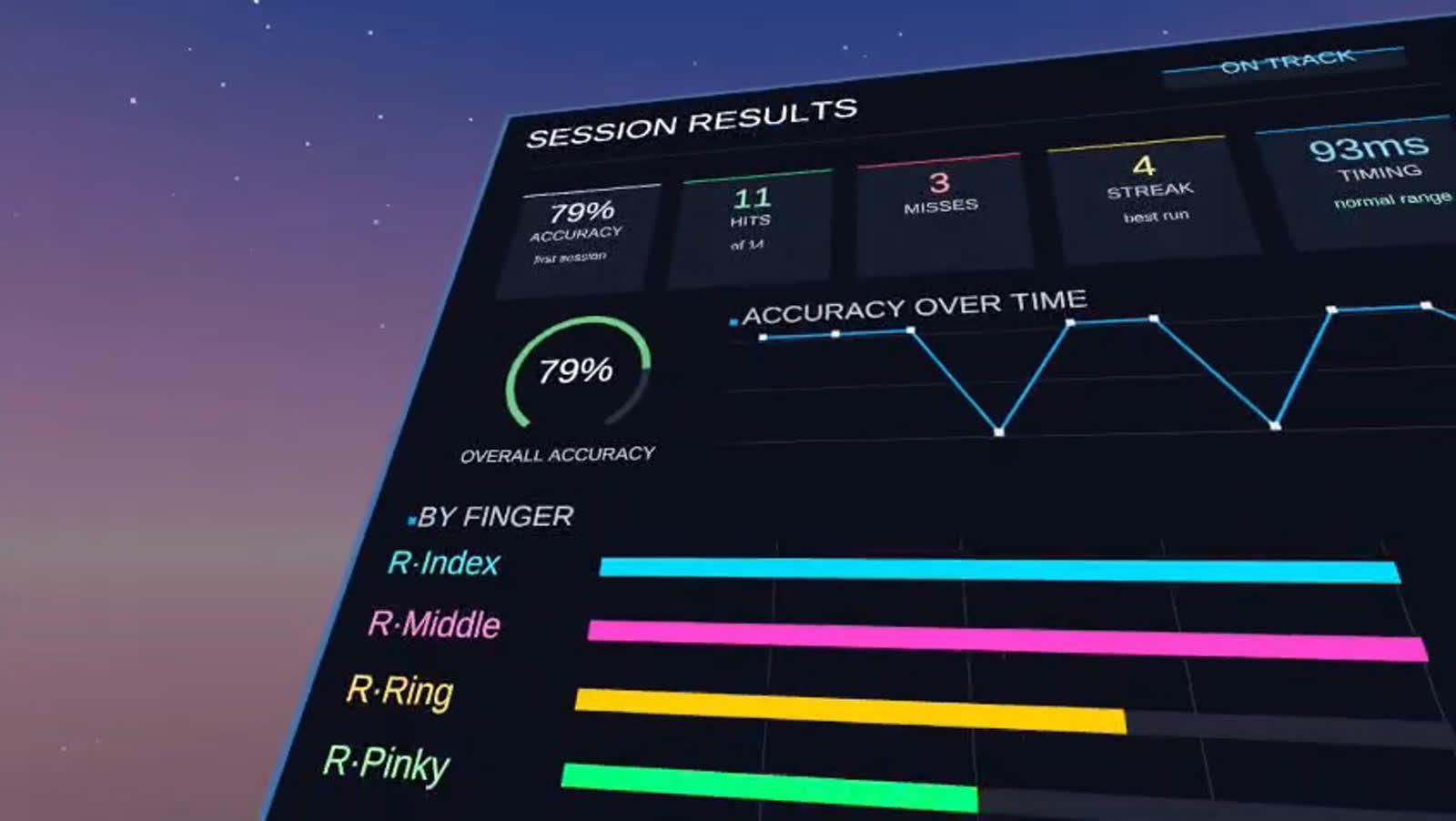
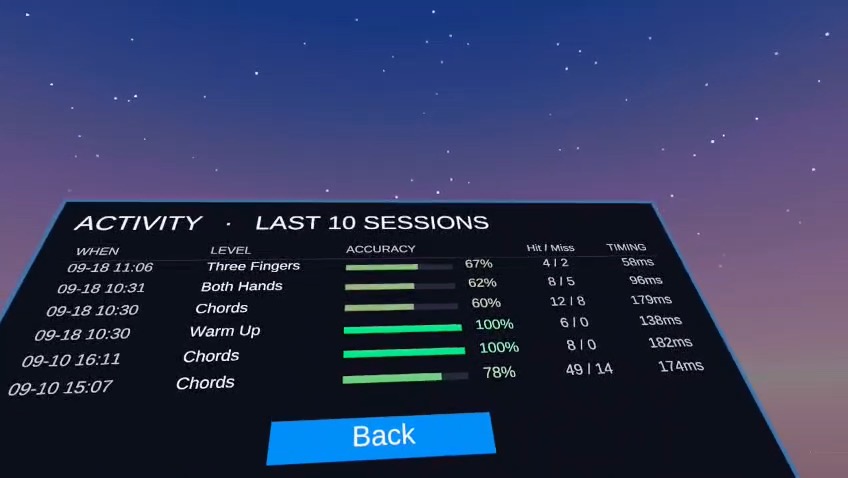
Patients can choose their session length, adjust the difficulty, work through movements at their own pace and see how accurately they are completing each task. At the end of the experience, the activity dashboard provides a snapshot of performance, including finger movement and accuracy, giving both the patient and clinician something tangible to look back on.
But for us, the interesting part of Finger Beats is not just the game.
It is the opportunity to use VR as an experiential assessment.
Rather than asking a patient to simply perform a series of repetitive movements while being observed, a clinician can introduce Finger Beats as an interactive activity and observe how the patient approaches different movements in a more engaging environment.
Depending on the individual and their clinical goals, a clinician may use the experience to explore areas such as:
🖐️ Finger and hand mobility
🎯 Coordination and movement accuracy
💪 Fine motor control and dexterity
🔄 Ability to repeat and sustain movement
🧠 Focus and engagement during a task
🤲 Differences in how individual fingers or hands are used
📈 Changes in performance across repeated sessions
The data and dashboard are not intended to replace a clinical assessment or provide a diagnosis. Instead, they can form another piece of information for a clinician to consider alongside their own assessment, patient feedback and other measures.
That distinction is important to us.
We are not trying to turn PatientVR into a diagnostic tool. We are working with clinicians and healthcare teams to create experiences that can support the way they already work, while giving patients a different and potentially more engaging way to participate.
There is also something powerful about being able to see progress.
When movement practice becomes a score, a target, a small improvement or a more accurate movement, patients have something visible to respond to. For some people, that can provide an extra reason to keep going and repeat the activity.
And that is really where Finger Beats came from.
Our team wanted to create something that felt less like being told to "do your finger exercises" and more like being invited to take part in something.
Move. Interact. Track. Progress.
Finger Beats is another step in our ongoing work to carefully design PatientVR Interacts around real-world needs, combining technology, engagement and meaningful activity into experiences that patients and healthcare teams can use together.
PatientVR Finger Beats — turning finger movement practice into an experience patients can enjoy.
More reading
 uncategorized
PatientVR PRO Uses Meta for Work Managed Devices
Virtual Reality (VR) is rapidly moving beyond entertainment and gaming into meaningful healthcare applications, supporting patient wellbeing, relaxation, pain management, rehabilitation, and improved care experiences.
Interact: OBJECTS
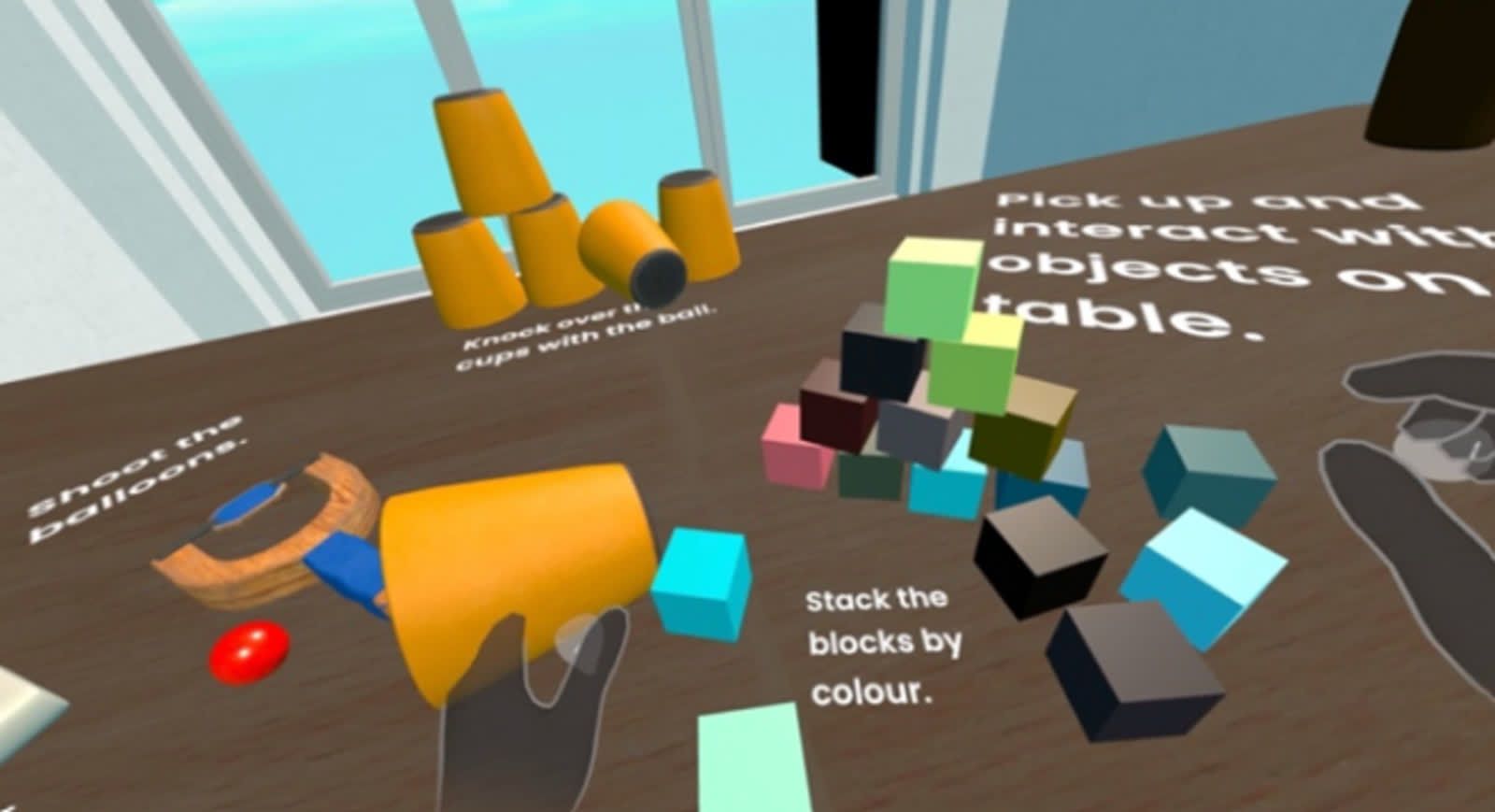
A gentle, interactive virtual experience where patients can stack, move, and explore familiar objects in a calming environment designed to support light movement, cognitive engagement and emotional well-being.
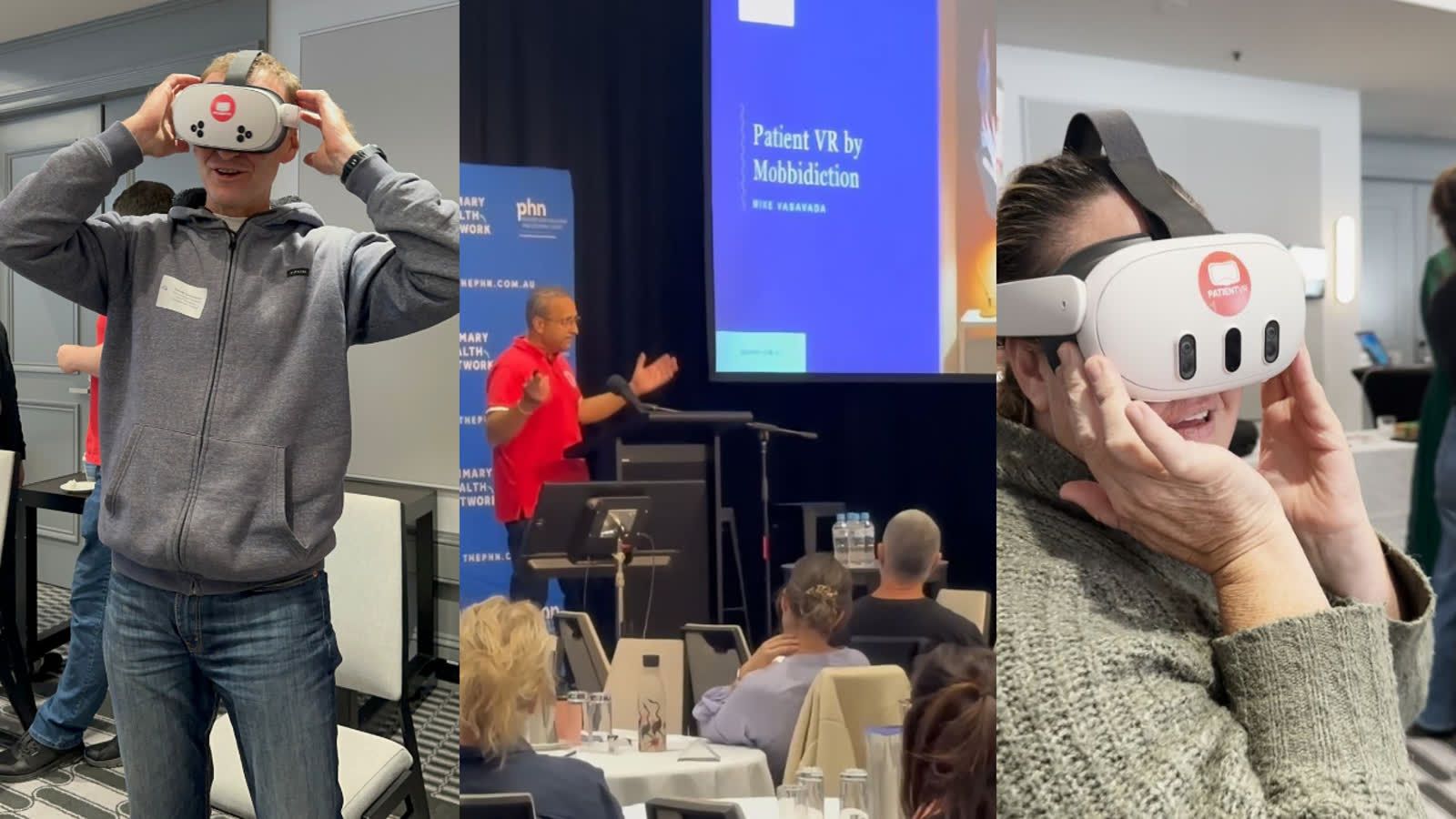
PHN’s Palliative and End-of-Life Care Symposium – Central Coast 2026
PHN’s Palliative and End-of-Life Care Symposium – Central Coast 2026 is a leading healthcare event focused on advancing palliative care in Australia through innovation, collaboration, and patient-centred approaches.