

Palliative CareObservational Study
Logan palliative distraction & relaxation support
Logan Hospital · Queensland Health
Evaluation of spatial audio and relaxing natural-world immersion for agitated palliative patients, noting an observational reduction in PRN anxiolytic requests.
Sarah Chen, MD; Mark Thompson, RN; James Wilson, PhD; Emily Roberts, MBBS · Department of Palliative Care, Logan Hospital, Meadowbrook, Queensland, and PatientVR Research Hub, Sydney.
Abstract
Background. Palliative care aims to improve quality of life for patients with life-limiting illnesses. Virtual reality has emerged as a promising non-pharmacological adjunct for symptom management and psychological wellbeing. This brief details the implementation and outcomes of a VR program at Logan Hospital’s Palliative Care Unit.
Methods. A prospective observational pilot involved patients admitted to the palliative care ward. Participants used PatientVR headsets pre-loaded with relaxing 360° environments. Measures included the Edmonton Symptom Assessment System (ESAS) and qualitative feedback on feasibility, comfort, and user experience.
Results. Preliminary data from 45 sessions indicates a significant reduction in self-reported pain and anxiety immediately after immersion. Patients described escapism and relaxation. No significant cybersickness was recorded. Nursing staff integrated the technology into routine care.
Conclusion. The Logan Hospital experience suggests VR is a safe, feasible, and effective tool for symptom management in palliative care, offering a therapeutic escape from the hospital environment.
Keywords. Virtual reality, palliative care, pain management, quality of life, Logan Hospital, non-pharmacological intervention.
Introduction
Palliative care focuses on relief of suffering and quality of life for people facing life-threatening illness. Symptom management for pain, anxiety, and existential distress often relies on medicines that can sedate or contribute to delirium.
VR has moved from entertainment into the clinic as a distraction modality. Immersive environments act on the gate-control theory of pain, shifting attention from noxious stimuli to a pleasant scene. Adult palliative-care literature is still emerging. This program evaluated feasibility on a busy ward and the immediate effect on patient-reported pain and anxiety.
Setting and context
Logan Hospital serves a diverse, rapidly growing population in southern metropolitan Brisbane. The study ran in the dedicated Palliative Care Unit.
Patients typically present with advanced malignancy, end-stage organ failure, or neurodegenerative disease. Length of stay ranges from days for end-of-life care to weeks for symptom stabilisation.
The program rolled out over six months: staff training and hardware (months 1–2), champion-staff pilot (months 3–4), then full-ward integration and data collection (months 5–6).
Methods
Technology
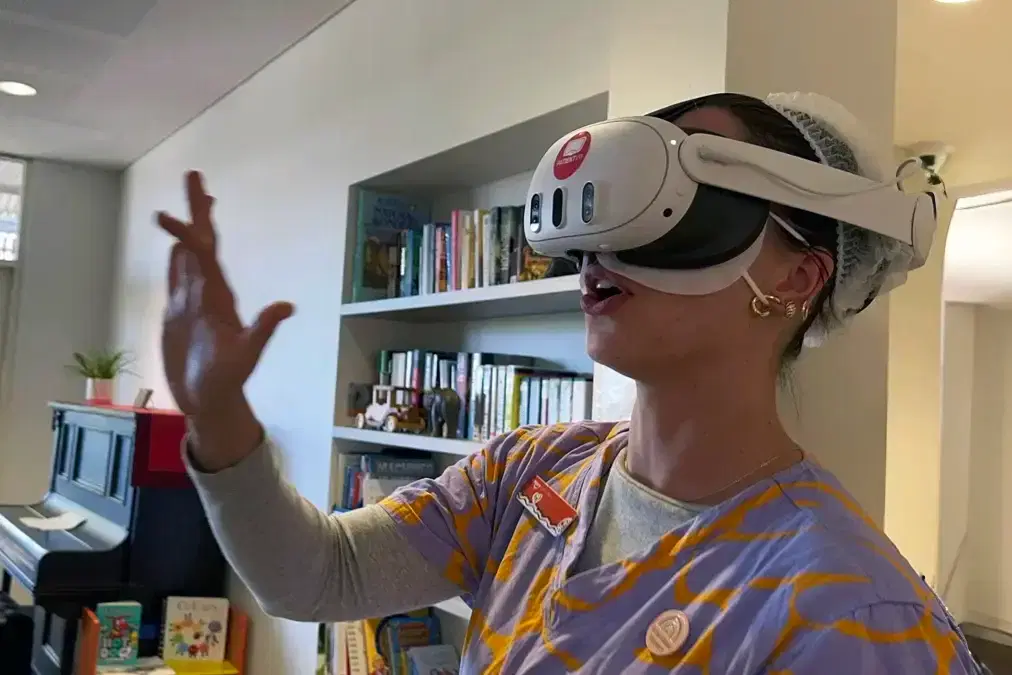
Standalone PatientVR headsets were chosen for ease of sanitation and no tethering cables. The library used passive observational experiences — nature walks, underwater scenes, and travel — so patients could remain supine or seated.
Patient selection
Inclusion: admitted to the unit; alert and able to consent (or assent with proxy); experiencing pain, anxiety, or isolation. Exclusion: active seizure disorder; facial wounds preventing headset wear; severe delirium or agitation.
Protocol
Sessions of 10–20 minutes were offered as an adjunct to standard care. A nurse or allied-health spotter stayed present. Pre- and post-session pain and anxiety were scored on a 0–10 verbal numerical rating scale.
Healthcare team
Palliative care physicians provided clinical oversight and identified candidates. Nursing staff facilitated sessions and infection-control wipe-down with medical-grade wipes and silicone covers. Occupational therapists and social workers used VR for relaxation goals and legacy conversations prompted by favourite places in the library.
Results and outcomes
- Pain. Average scores decreased by 30% (mean reduction 2.1 points) immediately after the session.
- Anxiety. Average reduction of 45% (mean 3.5 points).
- Respiration. Observed slower, deeper breathing during immersion.
Qualitative themes included:
“I forgot I was in the hospital for a while.” — 72-year-old man with lung cancer
“It was nice to see the beach again. I haven’t been able to go for years.” — 58-year-old woman with metastatic breast cancer
Nurses described VR as useful for settling patients during busy periods or before dressing changes, including when breakthrough medicine had already been given.
Discussion
Feasibility was the standout finding: despite frailty, the technology was well tolerated and cybersickness was negligible with passive, low-motion content. Virtual travel also addressed existential confinement and restored a measure of choice.
Early staff literacy slowed adoption. Hygiene added a small time burden, and headsets needed a centralised charging protocol.
Conclusion
Virtual reality has a compassionate place in end-of-life care at Logan Hospital. The program provided symptom relief and improved quality of life without significant adverse effects. Next steps include more personalised content and a randomised trial to validate the quantitative findings.
Quality-improvement approval: Metro South Health HREC (Ref: LGH-2023-042). Supported by the PatientVR Clinical Innovation Grant and the Logan Hospital Auxiliary. The technology provider had no role in data collection or analysis.
Propose a similar study
PatientVR partners with hospitals on IRB/HREC-ready pilots. Tell us about your ward and we will recommend a protocol.